Device Profiles
Device Profiles are templates that define the hardware configuration and settings for your IoT devices. By creating a profile, you can standardize device configurations and quickly apply them to multiple devices in your platform.
Accessing Device Profiles
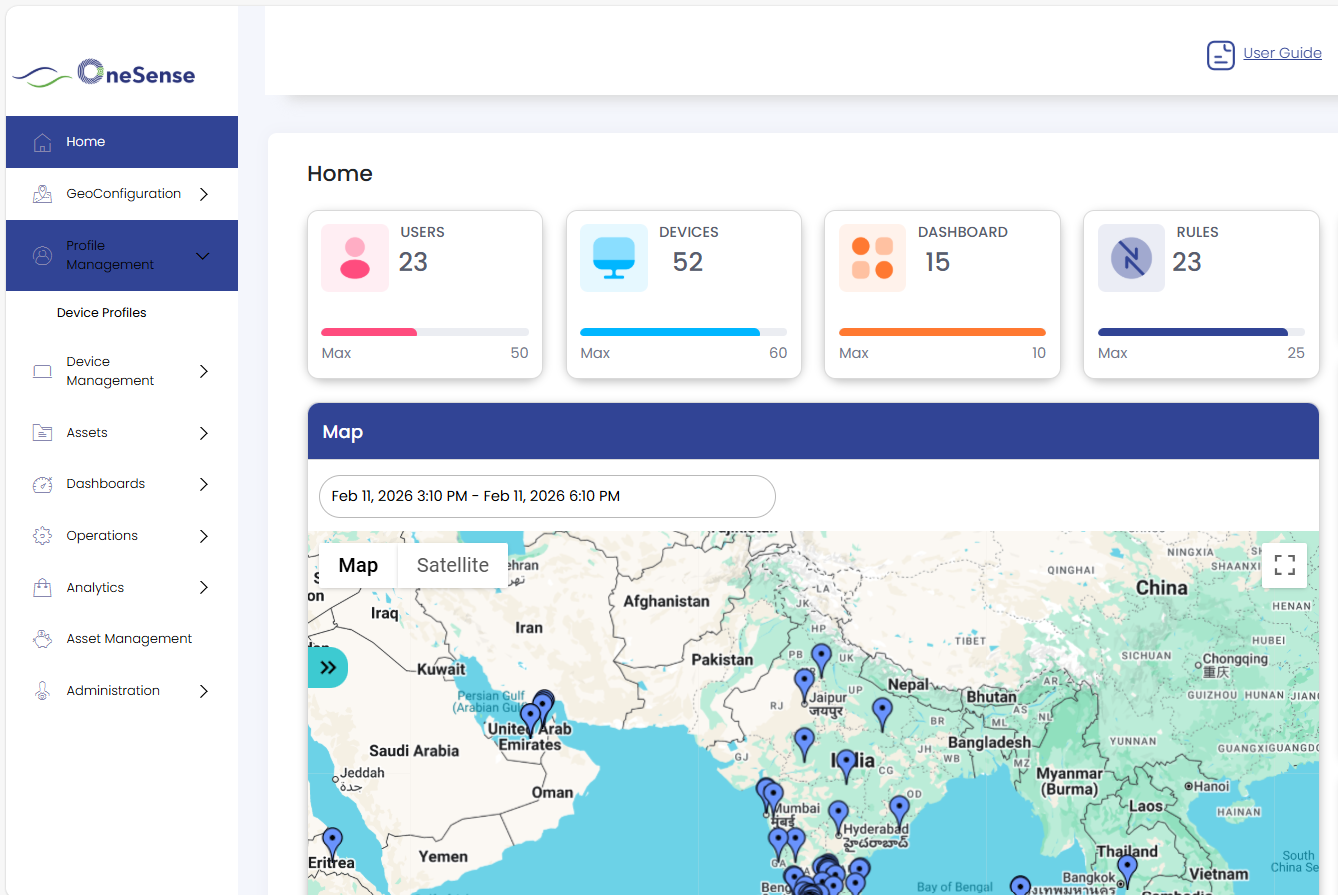
 Navigate to Profile Management in the sidebar of the platform.
Expand the menu and click on Device Profiles.
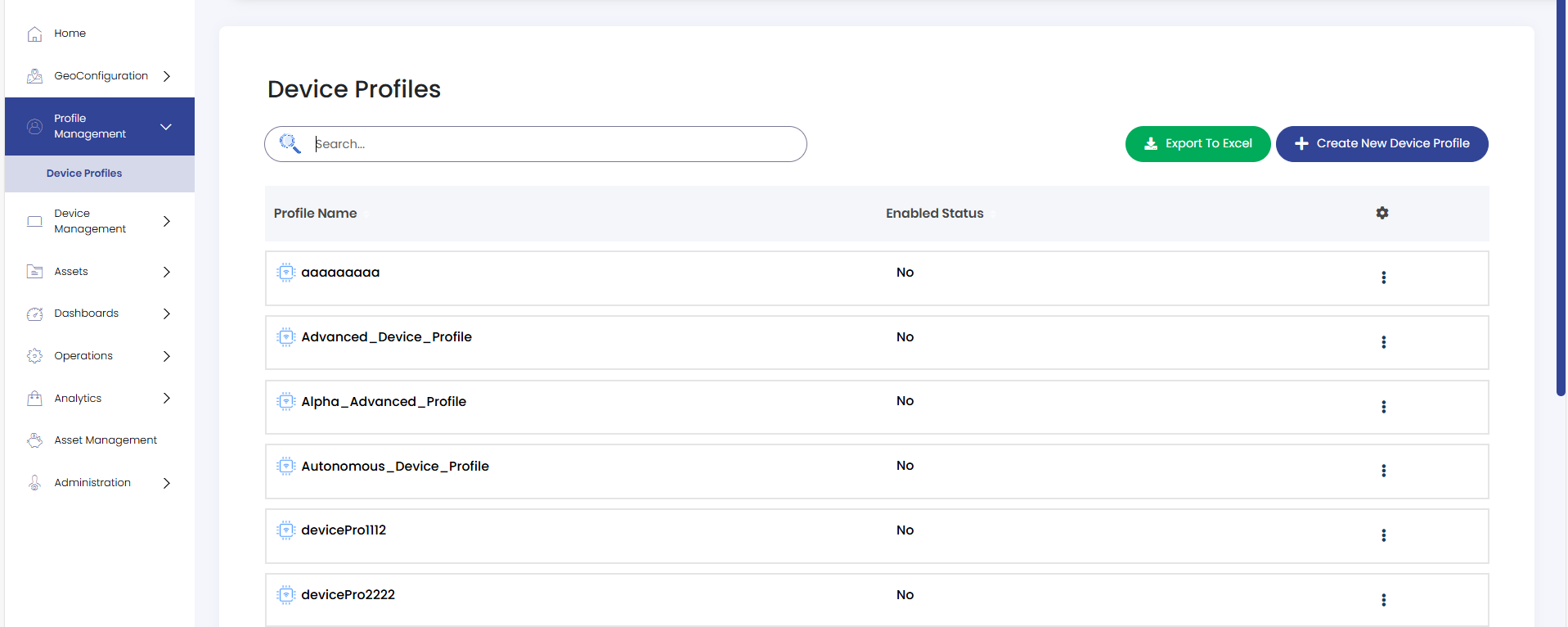
You will be redirected to the Device Profiles page where you can see a list of all existing device profiles.
Understanding the Device Profile List
Here you will find the Profile Name, Status and Action for each profile entry.
Action contains a three-dot menu (⋮) with options to Edit or Delete the device profile.
Creating a New Device Profile
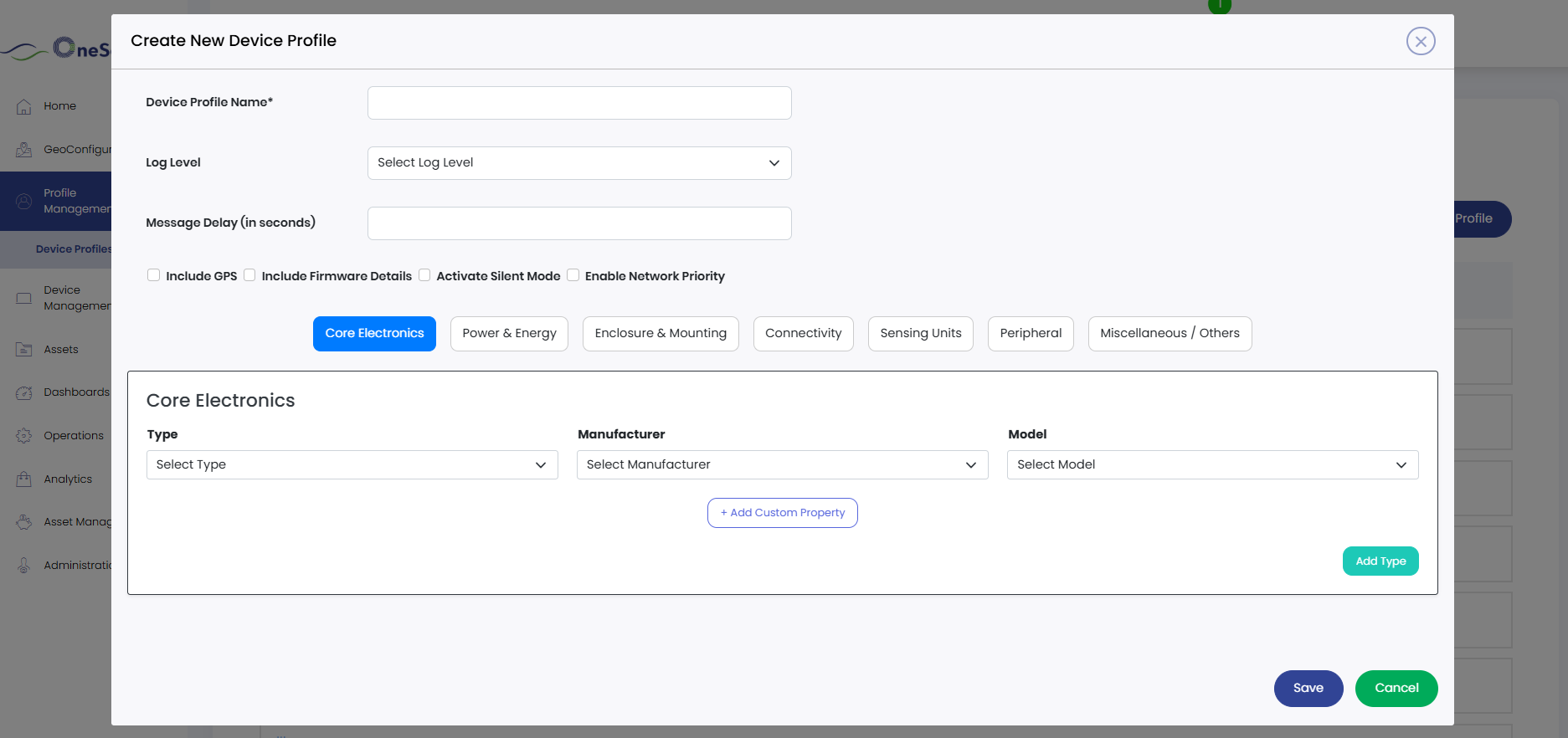
Click on Create New Device Profile button in the top right corner of the page.
A configuration dialog will appear where you can set up your device profile.
Step 1: Configure Basic Settings
Device Profile Name: Enter a unique name for your device profile.
Log Level: Select the logging verbosity level from the dropdown.
Message Delay: Enter the delay in seconds between device messages.
Include GPS: Check this box to enable GPS location.
Include Firmware Details: Check to include firmware information.
Activate Silent Mode: Enable to to turn off buzzer.
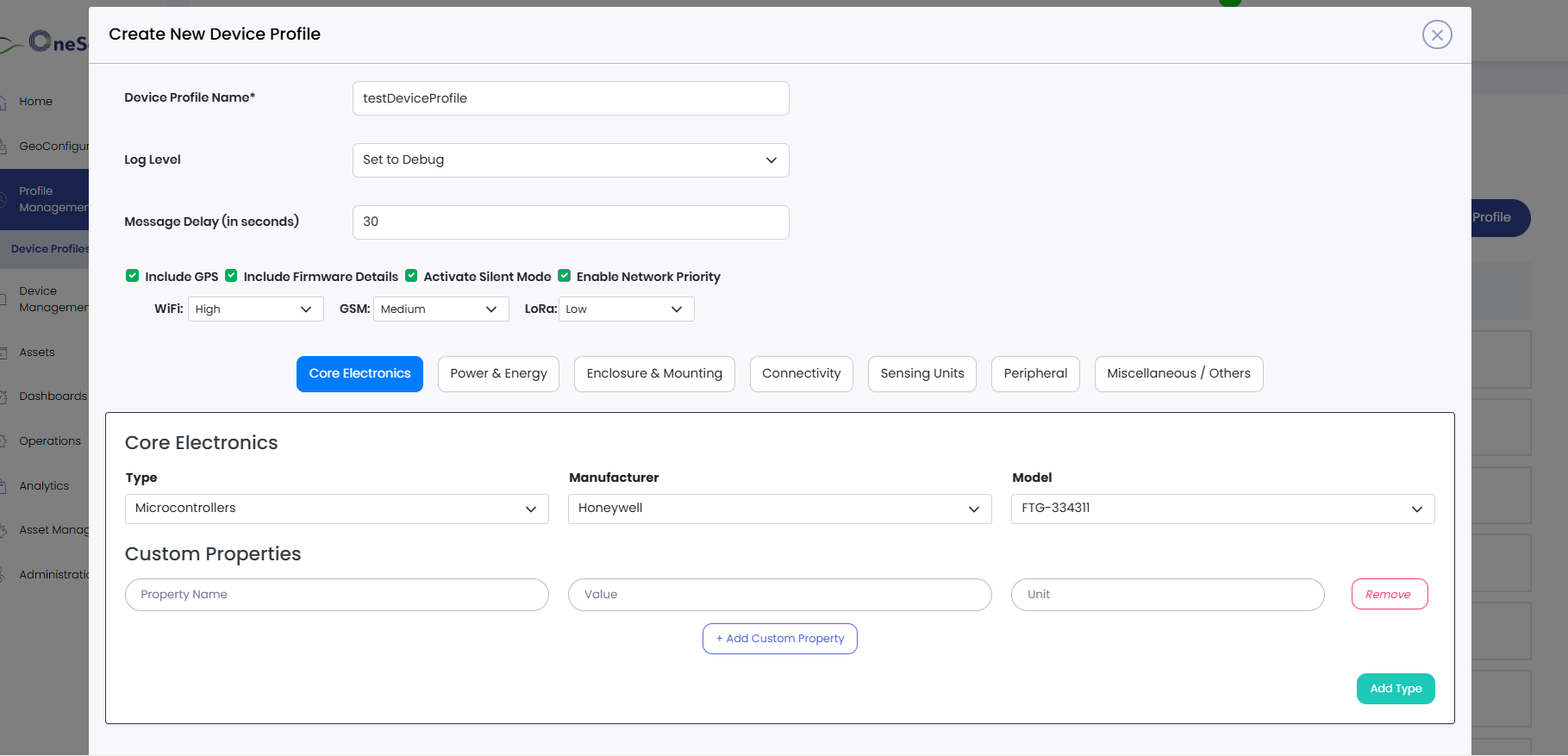
Enable Network Priority: Check to set communication priority for WiFi, GSM, and LoRa networks. You can set each network to Low, Medium, or High priority.
Step 2: Configure Hardware Components
Below the basic settings, you will find seven hardware category tabs:
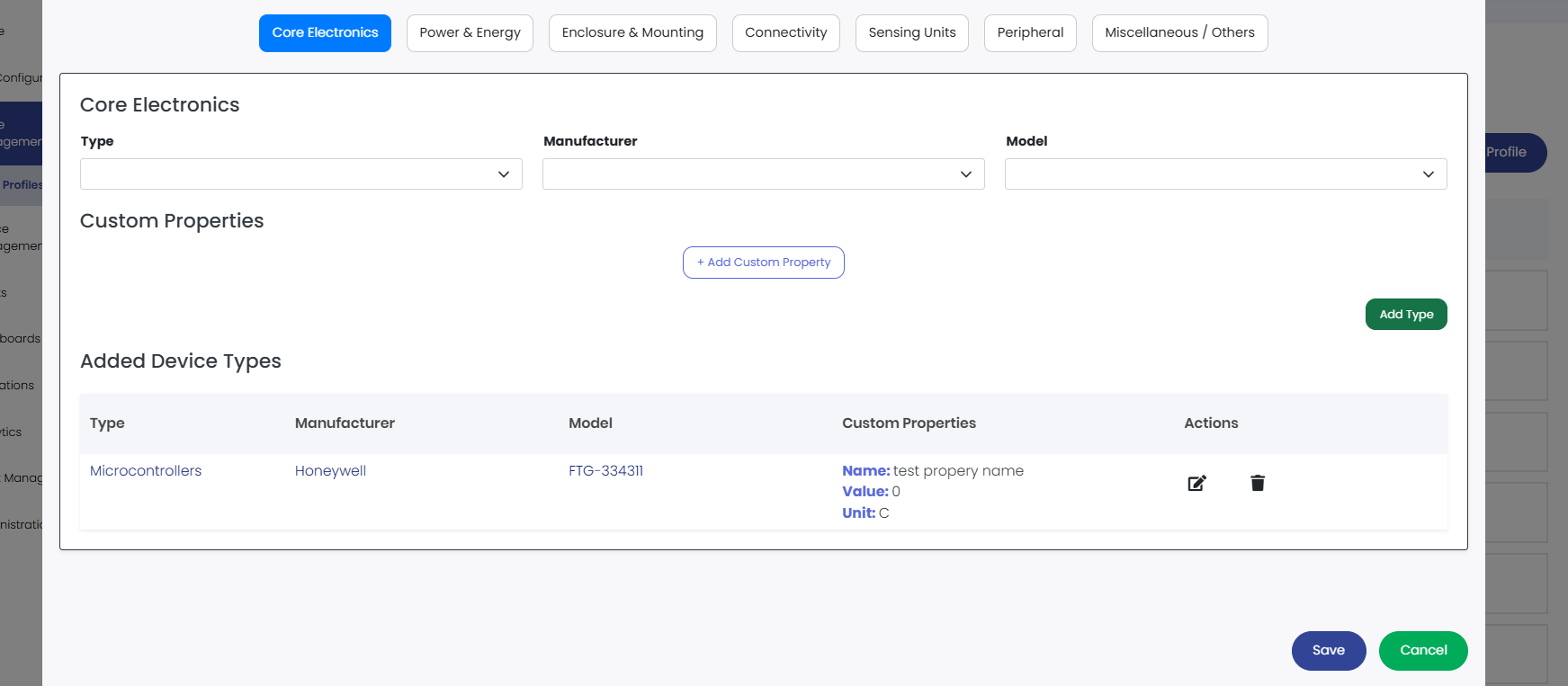
Core Electronics - Microcontrollers, processors, main circuit boards
Power & Energy - Batteries, power supplies, solar panels, charging circuits
Enclosure & Mounting - Protective cases, weatherproof enclosures, mounting brackets
Connectivity - WiFi, GSM, LoRa, Bluetooth modules, antennas
Sensing Units - Temperature, humidity, pressure sensors (with telemetry configuration)
Peripheral - Displays, LEDs, buttons, switches, buzzers
Miscellaneous / Others - Any other components
Configuring Components (All Categories Except Sensing Units)
For each category, click on the category tab and configure the following:
Type: Select the component type from the dropdown.
Manufacturer: Choose the manufacturer from the dropdown.
Model: Select the specific model.
Custom Properties (Optional): Click + Add Custom Property to add additional metadata. Enter the Property Name, Value, and Unit. Click Remove if you need to delete a custom property.
Click Add Type button to save this component to the profile.
Configuring Sensing Units (Special Configuration)
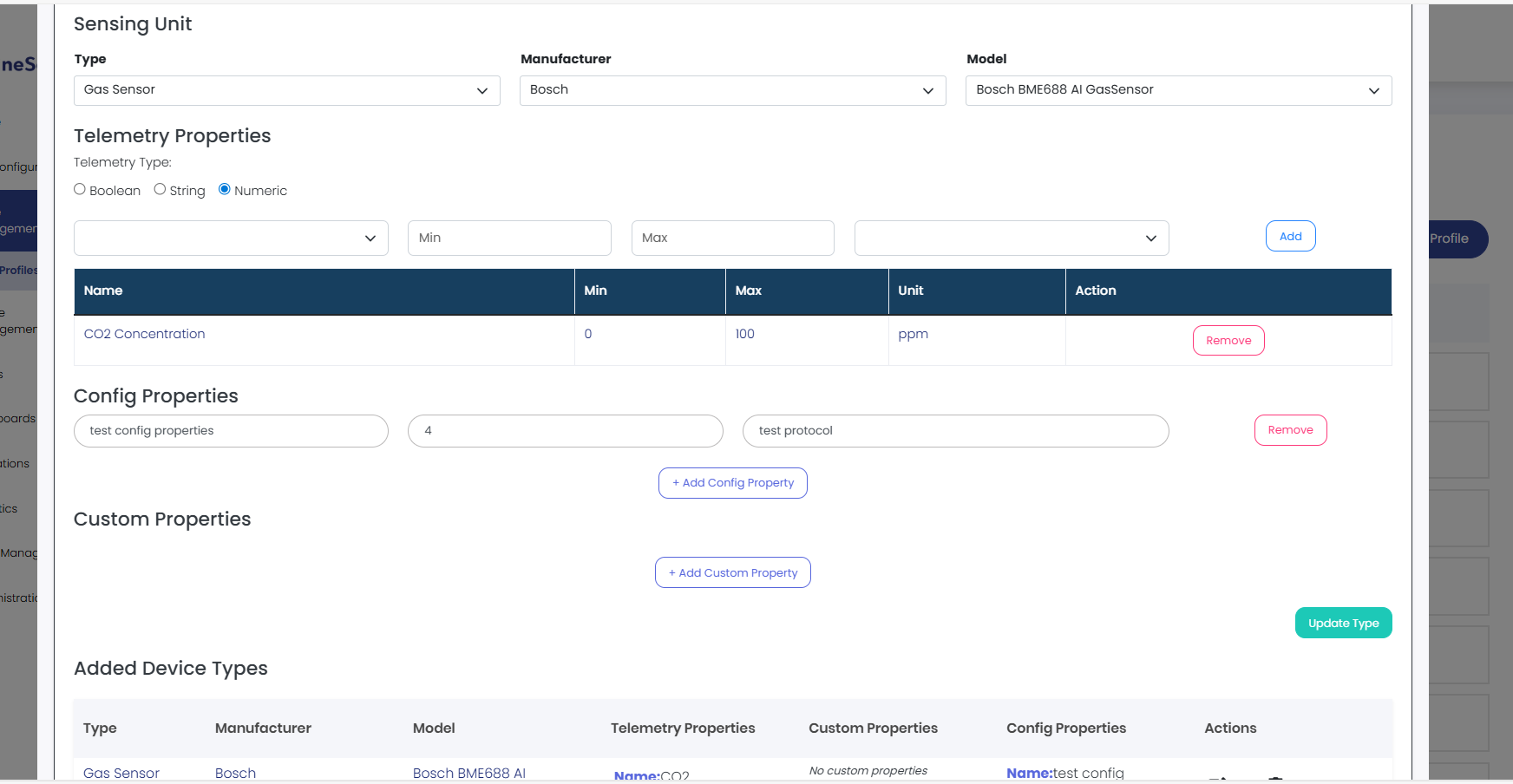
The Sensing Units category has additional configuration options for telemetry:
Select Type, Manufacturer, and Model as with other categories.
Configure Telemetry Properties: Select Telemetry Type (Boolean, String, or Numeric), choose the Telemetry from the dropdown (e.g., Temperature, Humidity), enter Min and Max values, select the Unit (e.g., Celsius, Fahrenheit, Percent), then click Add to add the telemetry property.
Config Properties: Click + Add Config Property to add configuration details. Enter Field Name, Field Value, and Field Protocol. Click Remove to delete if needed.
Custom Properties (Optional): Add custom properties as with other categories.
Click Add Type to save this sensing unit to the profile.
Step 3: Save the Device Profile
After configuring all necessary components across the different categories, review your settings.
Click Save at the bottom of the dialog to create the device profile.
Click Cancel if you want to discard the changes.
Your new device profile will appear in the list and can now be assigned to devices.
Editing a Device Profile
You can modify any existing device profile to update its configuration or components.
In the Device Profiles list, locate the profile you want to edit.
Click the three dots (⋮) on the right side of the profile row.
Select Edit from the dropdown menu.
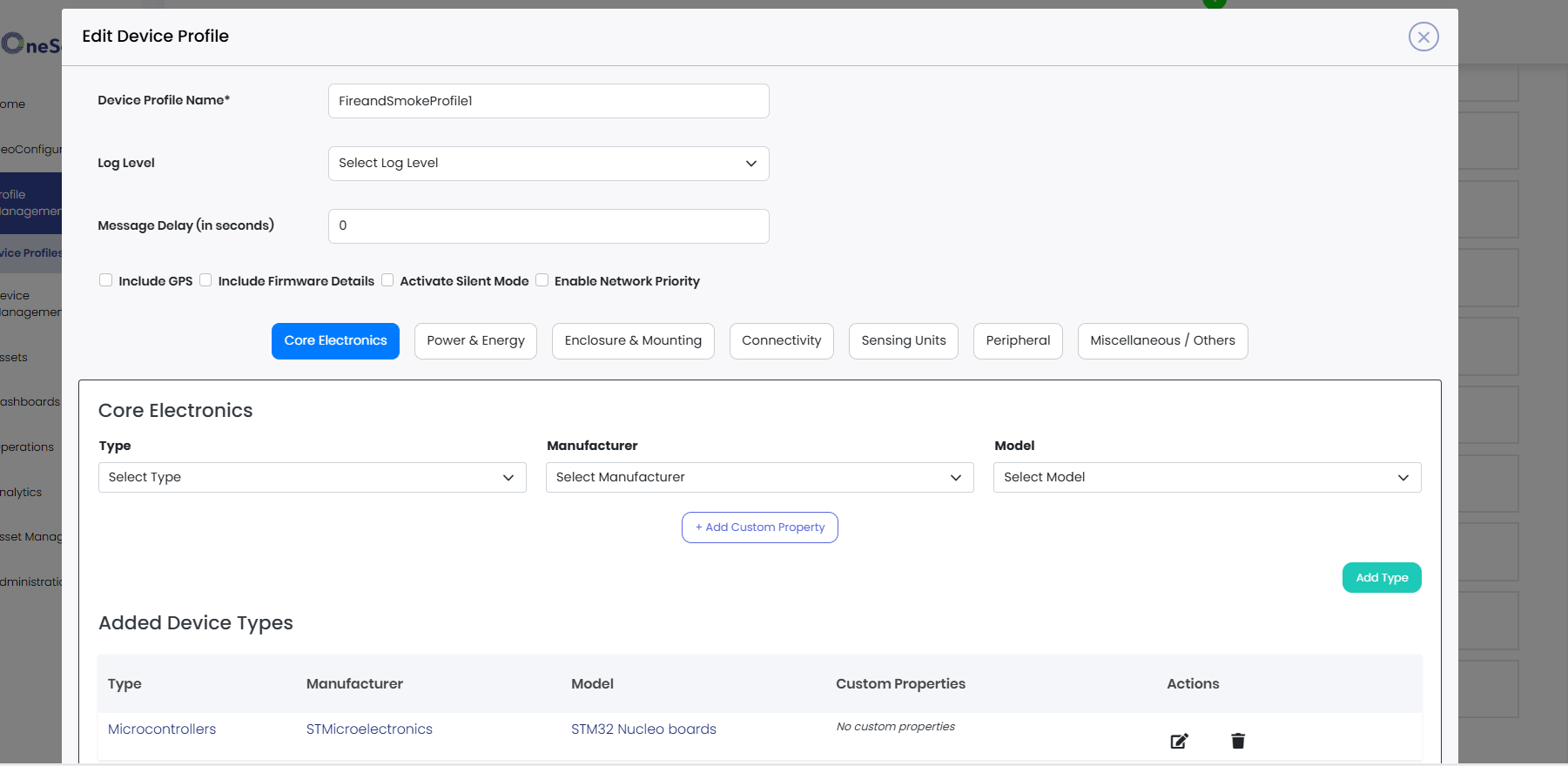
The configuration dialog will open with all current settings and components displayed.
Make your desired changes: Update basic settings (log level, message delay, network priorities etc.), modify existing components in any category, add new components using the + Add Custom Property button, remove components using the Delete button, or update telemetry properties for sensing units.
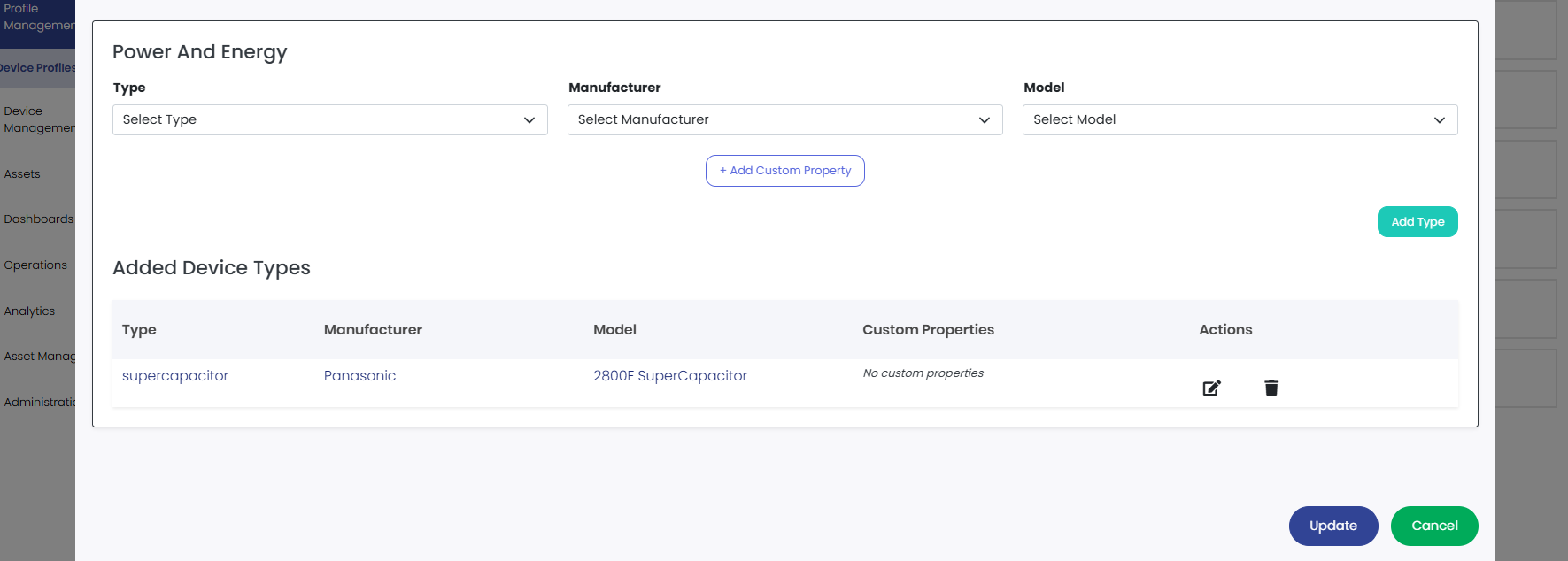
For each category where you make changes, click the Add Type button to save those component changes.
After making all desired changes across all categories, click Update to save your modifications to the device profile.
Click Cancel to discard changes and close the dialog.
Deleting a Device Profile
You can remove device profiles that are no longer needed.
In the Device Profiles list, locate the profile you want to delete.
Click the three dots (⋮) on the right side of the profile row.
Select Delete from the dropdown menu.
Confirm the deletion when prompted.
Important: You cannot delete a device profile that is currently assigned to one or more active devices. If you attempt to delete a profile in use, you will see an error message. To delete such a profile, first reassign all devices to a different profile or delete the devices.
By effectively managing device profiles, you can maintain consistency across your IoT deployment and simplify device configuration within the OneSense platform.